About this book
Mechanics is the foundation beneath every engineered object. Anything you design carries a load, and anything that carries a load is made of a material that responds to it. That is true of a bridge, and it is equally true of a circuit board, a catheter, a sensor housing, and a robotic joint.
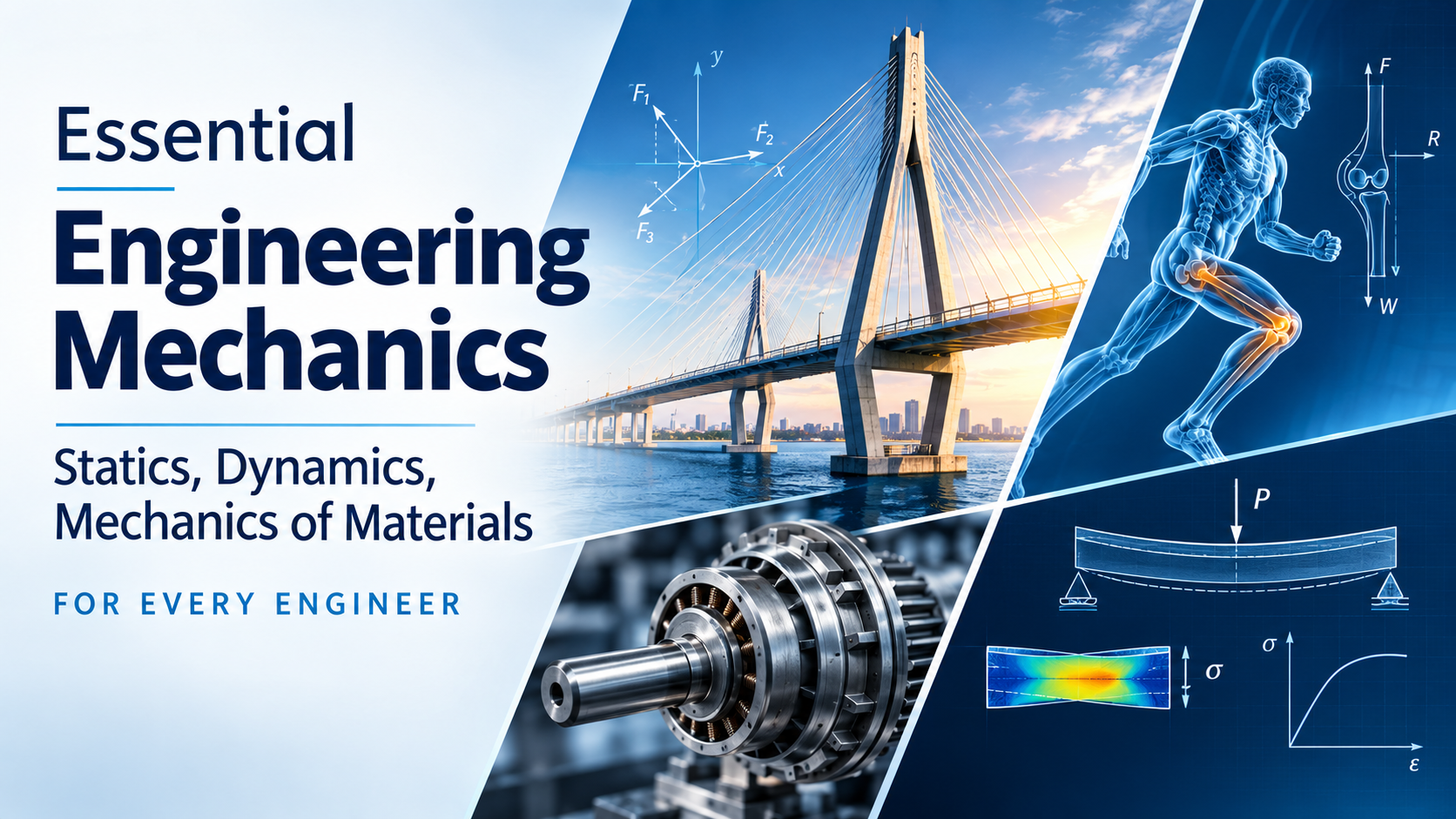
This book covers three subjects that most curricula spread across three separate courses: statics, dynamics, and mechanics of materials. Statics determines the forces acting on a body at rest. Dynamics considers motion, or more precisely accelerated motion, as it is produced by forces. Both treat bodies as rigid, meaning they do not change shape under load. Mechanics of materials drops that assumption and asks how a body actually stretches, twists, or bends when force is applied.
Compressing three courses into one book means making choices. This one is written for engineers who need the fundamentals of mechanics without specializing in it, which describes most electrical, biomedical, chemical, industrial, and computer engineers, along with anyone returning to the subject after time away. The goal is not mastery of every technique, which no book this size could deliver, but a working command of the fundamentals and enough judgment to recognize a mechanics problem when it is in front of you and know how to begin.

Learn Most Efficiently
Through Adaptive Books
Social Media
Copyright © 2026 Avidemia. All right reserved.